Services
Passive Fire Protection & Compartmentation Reviews
Assessment of compartmentation, fire stopping, fire-resisting construction and structural fire protection. Practical reporting to support dutyholders in understanding and managing passive fire protection risks.
What is passive fire protection?
Passive fire protection refers to the built-in fire protection measures within a building that are designed to contain fire and smoke, maintain structural integrity and protect escape routes without requiring activation or human intervention.
Unlike active systems such as sprinklers or detection, passive fire protection is inherent in the building's construction. When it is compromised — through poor workmanship, building modifications, penetrations or age-related degradation — the consequences can be significant for evacuation, fire spread and overall life safety.
Compartmentation
The division of a building into fire-resistant sections to limit fire and smoke spread and maintain safe escape routes.
Fire stopping
Sealing of penetrations through fire-resisting elements — such as where pipes, cables or ducts pass through walls and floors.
Fire-resisting construction
Walls, floors and ceilings that provide a period of fire resistance, typically expressed in minutes (e.g. 30, 60 or 120 minutes).
Fire doors
Doors designed to restrict fire and smoke spread for a defined period. Their effectiveness depends on correct specification, installation and maintenance.
Structural fire protection
Measures applied to structural elements to maintain load-bearing capacity and prevent structural failure during a fire.
Why breaches matter
A single unprotected penetration through a compartment wall or floor can allow fire and smoke to travel rapidly through a building, reducing the effectiveness of the compartmentation and affecting the safety of occupants who may be relying on those barriers to reach a place of safety.
In high-rise buildings, HMOs and hotels, the consequences of compartmentation failure can be particularly serious given the number of people at risk and the evacuation arrangements in place.
Passive fire protection defects are often introduced during maintenance, refurbishment or service installation works, where fire stopping may not have been reinstated correctly — or at all.
Common causes of breaches
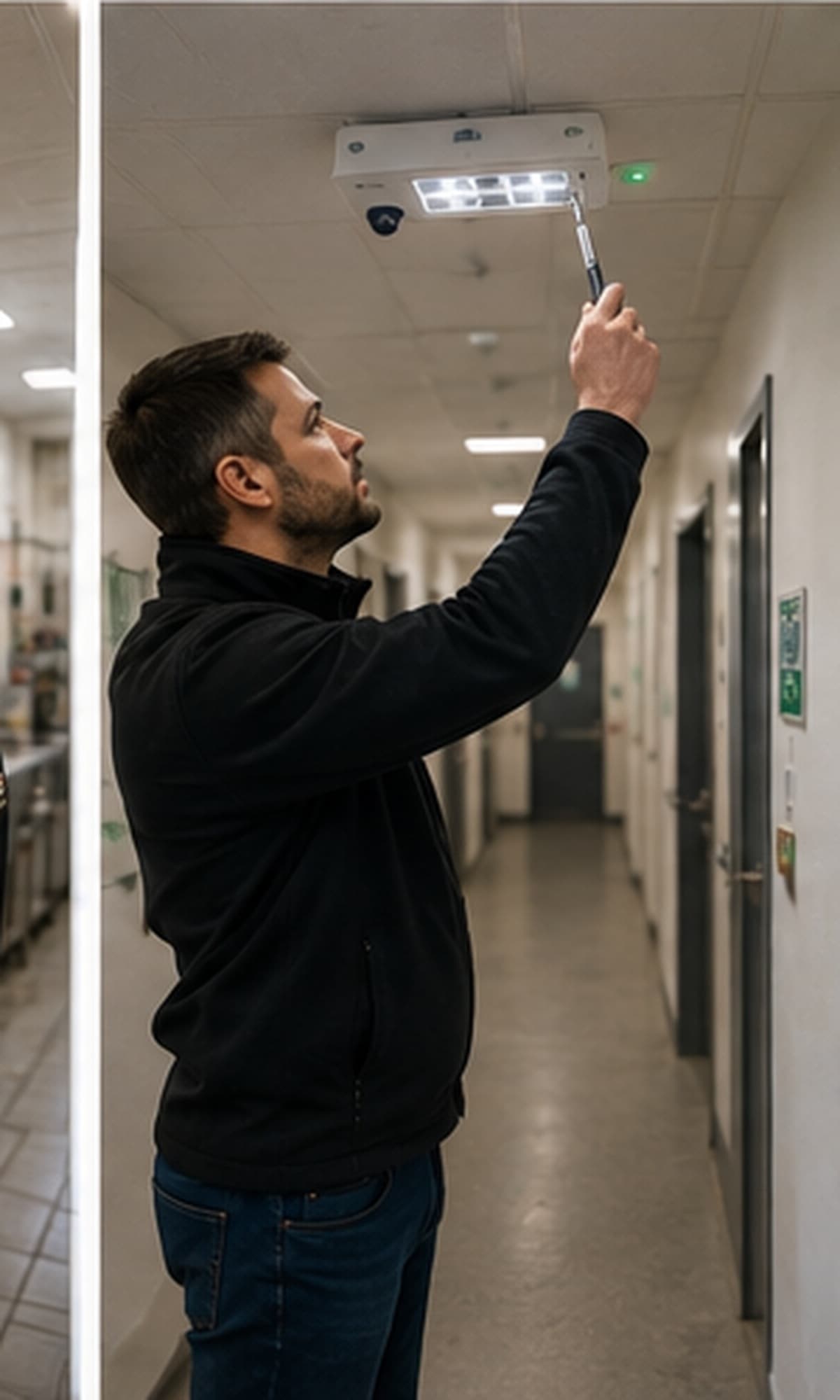
- —Service penetrations not fire stopped
- —Fire doors wedged open or not self-closing
- —Incorrectly specified or installed fire doors
- —Cavity barriers missing or incorrectly positioned
- —Refurbishment works affecting compartmentation
- —Age-related degradation of fire stopping materials
- —Unprotected service risers
What the review can include
The scope of a passive fire protection review is tailored to the specific premises, its construction, history and any known areas of concern. The following elements may be considered as part of the review.
- Service riser penetrations (pipes, cables, ducts)
- Fire doors, frames, seals and self-closing devices
- Fire stopping around services
- Voids, ceiling voids and cavities
- Fire-resisting walls, floors and ceilings
- Escape route protection
- Breaches introduced during refurbishment or maintenance
- Legacy issues in older buildings
- Areas of concern identified in fire risk assessments
Premises that may benefit from a review
While passive fire protection reviews are relevant to many building types, certain premises are particularly likely to benefit from a structured assessment.
- High-rise residential buildings
- Houses in Multiple Occupation (HMOs)
- Hotels and multi-storey accommodation
- Complex commercial premises
- Buildings undergoing refurbishment or fit-out
- Buildings with a history of service modifications
- Older or legacy premises
- Buildings where previous FRA identified compartmentation concerns
A passive fire protection review does not constitute a structural survey or fire engineering assessment. Findings are based on visual inspection at the time of review. Intrusive investigation or specialist structural analysis may be required in some cases.
Request a Compartmentation Review
Submit an enquiry with details of your premises. A member of the team will review the information and contact you to discuss the scope and approach.